Thursday, 18 March 2010

Island in a lake on an island in a lake on an island

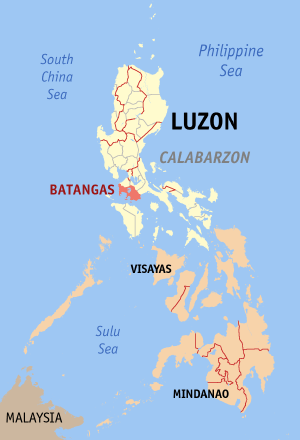
Located towards the south of the northern Luzon Island in the Philippines, Taal Lake is perhaps one of a kind. Created between one and five-hundred thousand years ago by a giant volcanic eruption. Currently, Taal is registered as the third largest body of inland water in the Phillipines with an approximate shore length of 71 miles.

The central Crater Lake is pipped with tiny Vulcan Island. Volcano Island was saved very recently from Korean developers Jung Ang Interventure by the Philippine authorities from becoming a health spa resort and current tourists are able to visit the Island, ascending to the top on horseback.
Taal Lake was previously connected to the sea however, during the 18th century a series of powerful eruptions caused land bridges to form and close off the connection to the sea. After many years of tropical precipitation, the lake water has become a freshwater body which drains into the sea via the short Pansipit River. Due to the previous connection with the sea, the lake is home to many endemic water species, the unfortunately now extinct Freshwater Bull shark (last seen in the 1930’s), the World’s only freshwater Sardine and one of the Earth’s rarest sea snakes. Due to the close proximity of human populations, much of the pristine natural environment has been spoilt with palm oil plantations, overfishing and pollution however as the volcano is still very active in geological terms, much of the surrounding landscape is at high risk of devastation.
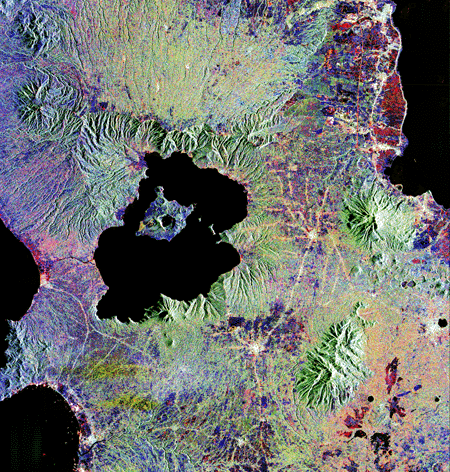
Taal Volcano is still active, last erupting in 1977 and showing high volcanic activity again in 1991 although neither too much effect. It is in itself a marvellous location and I should advise that to any who may visit this locale, add a trip to the Volcano Island to your agenda as it may or may not remain for any definite period.

Monday, 22 February 2010

Fish and chips - A History

Perhaps the most popular fast food in the United Kingdom, nothing beats a bag of chips accompanied with a fried, battered cod or other similar fish on a winters evening by the sea. It doesn’t even have to be winter or by the sea, the warm bag under your arm and the hot, vinegary scent wafting up to your nasal passage is enough to tempt even the most uptown connoisseur into a sample act of gastronomic depravity.

Despite the dish’s vast popularity among the peoples of the United Kingdom and abroad, very little is known about the origins of fried fish and chips. The frying of potatoes originates back to France during the 18th century where French fried was a term for cooking chips of potato or onion in hot oil. Another origin of fried potatoes dates back to the 1680’s and perhaps previous where the poor inhabitants of a Belgian village would fry fish in oil and during winter while the river was frozen, would substitute the fish with a carved potato fried in oil.

It was a proprietor of Jewish descent, Joseph Malin, who brought together, fried fish and fried chips in London, 1860. Although both had been around for a good while previous (Charles Dickens refers to a fried fish warehouse in Oliver Twist. 1838) This was the first well recorded time that they had gone on sale to the public as a dish. There are of course accounts of fish and chip shops setting up from the same period as well but there will never be any certain first. The dish was clearly very popular as throughout the 1860’s fish and chip shops began to spring up all across the country, with the advent of steam trains one can only assume that this enabled the rapid spread of the idea across the land and the availability of fresh fish inland. The facilities in these early shops where basic, coal fueled caldrons. The stench of coal fires and boiling oil was enough for the authorities to deem it an offensive trade and this remained until after the First World War.

Fish and Chips remain as one of the all time popular fast foods in the United Kingdom and abroad, mainly Australia and other British colonies. Modern popularity could be accredited to the relatively low price of the dish as well as the fact that fish and chips were not subject to rationing during the war although fish could become scarce.


Fish and Chips are definatly my favourite takeaway, Unhealthy and greatly satisfying.

Sunday, 24 January 2010

A Warm Welcome

After a few bears and a wildlife show about beers you start stumbebling ovar what you jus taid in what yur ooer about to say next... Then expect to be understood!?

I'd like to welcome each and every one of you viewers, even though you are not aware of each other if you are viewing at the same time, to The Indefatigable Source.