Saturday, 13 February 2016

Three Suns and Mortimers Cross


Three glorious suns, each one a perfect sun;
Not separated with the racking clouds,
But sever'd in a pale clear-shining sky.
See, see! they join, embrace, and seem to kiss,
As if they vow'd some league inviolable:
Now are they but one lamp, one light, one sun.
In this the heaven figures some event.

William Shakespeare Act Two Scene One of Henry VI, Part 3:

On the morning of February 2nd 1461, in the county of Herefordshire, two armies prepared to face in battle.   For six years, the Yorkist and Lancastrian forces had battled for the English crown and this was to be the next major installment.  The Yorkist army was now led by the 18 year old Edward, Duke of York. The Welsh Lancastrian armies of Sir Owen Tudor and other nobles loyal to King Henry VI were attempting to meet with the other supporting forces in England. The battle was a key event in continuing the separation of the Lancastrian armies and defeat for the Yorkists would have been a calamity for their cause.   

On the dawn of battle, a rare an unusual celestial phenomenon occurred, a parhelion or ‘sun dog’. The sun appeared to be split into three, rising over the horizon in unity. This was taken by the Yorkist men as an ill omen until Edward convinced them that it was a positive sign from heaven, the holy trinity and possibly representing the three sons of the Duke of York who were present in the army.
At Tretower court in the south of Wales, there is a replica tapestry depicting the event.

The Battle was decisive in the Yorkists favour , Sir Owen Tudor was captured and put to death while the Lancastrian forces were severely weakened and dispersed.

The phenomenon occurs when light is refracted off plate-shaped ice crystals high in the upper atmosphere- one of many halo effects- and can occur anywhere on the planet with the right conditions present. Very cold weather and cirrus or cirrostratus clouds at the same time.   
 
The overall appearance is one where the sun appears to have two fainter counterparts each side and exactly 22º apart, there are also two further that appear much fainter above and below the sun and the whole array is made up of a circular design that has a variable level of clarity, dependent on the conditions. The best appearances occur when the sun is both close to the horizon and during the winter months.

Friday, 24 July 2015

The World's Biggest Lizard


King of the Lizards walking along the beach
Before 1910 there were rumours of a mythical creature residing in an island in the East Indies.  It was that year which a member of the Dutch Colonial Forces, Lt. Major van Steyn van Hensbroek was told about a monstrous lizard few had seen inhabiting an island in western Flores, Indonesia.  Soon after, Lt. Major van Hensbroek visited Komodo in hope of procuring some specimens.  Upon arrival, it was claimed by members of the Dutch pearl-diving fleet that some of these lizards grew up to 7m long!  A frightful thought but most likely an exaggeration.  During his brief foray on the island, he managed to kill a specimen 2.2m long.


The discovery brought thereafter a number of expeditions to the island for both scientific research and sport.  Many wanted a Komodo trophy for their own.  Shortly after its description, the Sultan of Bima and the Dutch authorities outlawed making sport of hunting it and severely limited the numbers of people that could be taken to the island.  Even today there are restrictions on travelling to the islands in the national park whereby a permit is required.


Size Comparison
The Komodo dragon is a gigantic version of a monitor lizard.  It is the biggest lizard in the world at 3m long, with a weight of 70kg and the strength to knock over a tree.  Although they may appear lethargic, they can reach a speed of 12mph in very little time which is key to their stealthy approach to hunting.  Their bite is venomous but also contains a lot of nasty bacteria which is what really kills its prey.


The Island where they live has very few inhabitants.  Kampung Komodo, the only village on the main island, has a population of about 1,300.  Houses are built on stilts as the Komodo Dragon has a long history of attacking humans.   The island is relatively small at 390 square kilometres, about the same size as the Isle of Wight in Hampshire, England.  The lowlands of the island are blanketed in grass which is dry all year round except for monsoon season.  Higher up towards the island’s peaks is a dark green forest containing palms and many tropical plants.  A steep contrast on a foreboding island which is now a UNESCO world heritage site.
Map of Komodo, Indonesia

Wednesday, 12 October 2011

The ship sailed and sank in under one mile

Model of Vasa at the Vasa museum, Stockholm

The Wasa or Vasa was largely forgotten until the 1950’s and 60's when it was raised from the seabed in good condition and preserved in a Stockholm museum. 

The warship was intended to be the pride of King Gustavus Adolphus of Sweden and the flagship of the new Swedish navy.

Little expense was spared in the ships construction, the upper portions encrusted with carved wooden statuettes and covered in gold leaf.  She was fitted out with 64 bronze cannon, 48 of which were 24 pounders over 2 decks, a truly frightening armament for her time.  

The ships construction was fraught with problems, it was uncommon in the early 17th century to produce a plan or diagram for the construction work (or it's just that very few have managed to survive).
Four ships were originally ordered, two with a slightly larger keel, however, the shipyard ran into financial problems thus delaying their construction. The king, worried by the loss of ten ships to a single storm urged the already hurried construction of the smaller ships but also demanded new measurements to be followed for the Vasa, to have a 37 meter keel. Perhaps the first flaw with its construction as the timber had already been cut and then reshaped to form the new keel. The shipwright in charge of the project never saw out its construction as he died in early 1627 and so his Dutch assistant continued the project. 

The Vasa’s hull was launched in 1627; the work to complete its upper portions and fitting went ahead.  Statuettes of wisdom and prowess were adorned to the upper ships exterior to assert the Swedish authority and power over the seas. The Vasa would have been vividly painted to create a powerful and dazzling show of exuberance, decorations inspired by the renaissance in Europe and to assert that Sweden was on the map, the king himself had ordered this ship. 

Route of the Vasa
On the 10th of August 1628, The Vasa left on her maiden voyage under the command of Captain Söfring Hansson, as soon as the ship emerged into more open waters about one nautical mile from the dock, a gust filled her sails and she heeled over, her sails where loosened however, the second gust heeled her strongly back to port and sea water poured in though her open lower gun ports causing her to lurch further and further ultimately sinking to a depth of 32 meters. A third of the 150 strong crew perished while others clung onto debris.
Displacement of an 18th century wasrship compared to the Vasa


The Catastrophe was witnessed by hundreds or thousands of ordinary Stockholm residents as well as foreign ambassadors and officials.   When notified, King Adolphus became enraged and ordered the Captain to be imprisoned on charges of “imprudence and negligence”.  A committee was formed to fully investigate the cause of the sinking, Captain Söfring swore during the initial interrogation that the cannon had been properly secured and the crew were sober. 


Each of the surviving ships officers were questioned in the presence of the fleet’s admiral.  Surviving crew members were also quizzed about the ships handling moments before the sinking.  Nobody was prepared to accept the blame and the crew and ships constructors were divided so the blame could not be placed. 
The real fault fell on the poor design, the keel had been lengthened and overall design had been altered resulting in a very shallow draught and poor handling.  Also the second deck of heavy cannon placing the centre of gravity above the waterline, much of which had been directly approved by the king.


Of course the King can’t be to blame can he?                                                          

Wednesday, 8 September 2010

First and Final Flight of the Coat Parachute

Ideas confined to the realm of a child’s imagination are often best left there, however, this was not to stop one intrepid inventor.

An Austrian born tailor, Franz Reichelt (1879-1912) was one such person to fall foul of the mistake of putting an idea into practice without prior thought of testing.
Franz left Vienna to Paris in 1898 and opened a dressmaking shop in 1907, catering for Austrian tourists. Around this time he became interested in the tales of early aviators and their inevitable accidents and in 1910 began pioneering a design of parachute-suit.
The suit was made from a fabric only slightly bulkier than that of an aviation suit and the silk canopy was held open by a couple of metal rods. Reichelt’s early designs proved successful when used with dummies and foldable silk wings. However these designs proved difficult to adapt for a human to wear. He presented his design to La Ligue Aérienne at the Aéro-Club de France weighing in at 70kg and 65 square feet of material. However, his Design was rejected as it was considered the canopy was too weak.
In 1911, Colonel Lalance offered a prize of Ten-thousand Francs, double his previous prize offer for a working parachute design weighing less than 25kg. Reichelt improved his designs and set about reducing the weight and increasing the surface area yet, tests with dummies were unsuccessful as they fell heavily to the ground. It was reported in 1911 that he had tested an unsuccessful parachute design on himself, falling heavily eight to ten meters into a pile of straw to escape injury. Another story, from Le Martin reports that he had tested another parachute at Joinville on himself again and the resulting fall broke Reichelt’s leg. For the remainder of 1911, Reichelt struggled to gain permission to test parachute dummies from the first floor of the Eiffel tower from the Parisian authorities.

February 1912, Reichelt announced that he had received permission to test his new parachute from the Eiffel tower, using a dummy.
Early on Sunday the 4th February, Reichelt arrived at the tower by car with two friends. His suit already equipped in folded form. Le Gaulois described the suit as ‘only a little more voluminous than ordinary clothing.’ It did not impede Reichelt’s movement when folded and as simple to use as extending your arms like a bird to spread the chute. The enormous cloak covered 30 square meters with a height of five meters while weighing at just 9kg. Reichelt modelled the suit for the rolling cameras as hundreds of people looked on in the cold winter morning. However, contrary to his approved permissions, Reichelt had kept his intention secret until the last moments, he intended not to use a dummy but use himself for the test. A surprise to everybody. His friends ardently attempted to dissuade Reichelt from making the jump, pointing out the strong breeze and the obvious peril of this course of action. Reichelt was resolved to make it himself and trusted completely in the integrity of his invention.
"I want to try the experiment myself and without trickery, as I intend to prove the worth of my invention."


At 8:22 am, Reichelt took place on a hastily made launch pad, a stool on a restaurant table next to the interior guard rail. He adjusted his parachute and checked the wind by throwing a piece of paper torn from a book. He hesitated shortly before making his final voyage. He leapt, his parachute tangled around him only partly opening and bursting open at the last moment. He plummeted like a stone 57 meters into the frozen ground beneath the Eiffel Tower, his arm and leg crushed, spine and skull fractured, heavy bleeding from his mouth, nose and ears. Reichelt’s corpse was rushed to hospital all the while being filmed by journalists and watched by onlookers. The impact was sufficient to cause a measurable crater.

Thursday, 18 March 2010

Island in a lake on an island in a lake on an island

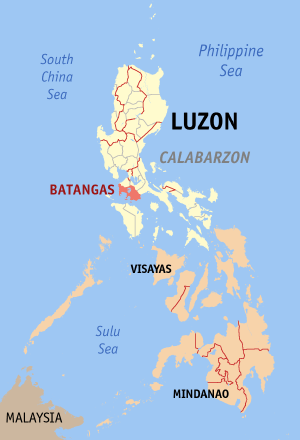
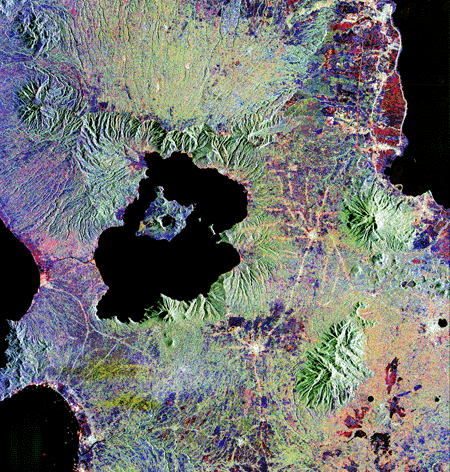
Located towards the south of the northern Luzon Island in the Philippines, Taal Lake is perhaps one of a kind. Created between one and five-hundred thousand years ago by a giant volcanic eruption. Currently, Taal is registered as the third largest body of inland water in the Phillipines with an approximate shore length of 71 miles.

The central Crater Lake is pipped with tiny Vulcan Island. Volcano Island was saved very recently from Korean developers Jung Ang Interventure by the Philippine authorities from becoming a health spa resort and current tourists are able to visit the Island, ascending to the top on horseback.
Taal Lake was previously connected to the sea however, during the 18th century a series of powerful eruptions caused land bridges to form and close off the connection to the sea. After many years of tropical precipitation, the lake water has become a freshwater body which drains into the sea via the short Pansipit River. Due to the previous connection with the sea, the lake is home to many endemic water species, the unfortunately now extinct Freshwater Bull shark (last seen in the 1930’s), the World’s only freshwater Sardine and one of the Earth’s rarest sea snakes. Due to the close proximity of human populations, much of the pristine natural environment has been spoilt with palm oil plantations, overfishing and pollution however as the volcano is still very active in geological terms, much of the surrounding landscape is at high risk of devastation.

Taal Volcano is still active, last erupting in 1977 and showing high volcanic activity again in 1991 although neither too much effect. It is in itself a marvellous location and I should advise that to any who may visit this locale, add a trip to the Volcano Island to your agenda as it may or may not remain for any definite period.

Monday, 22 February 2010

Fish and chips - A History

Perhaps the most popular fast food in the United Kingdom, nothing beats a bag of chips accompanied with a fried, battered cod or other similar fish on a winters evening by the sea. It doesn’t even have to be winter or by the sea, the warm bag under your arm and the hot, vinegary scent wafting up to your nasal passage is enough to tempt even the most uptown connoisseur into a sample act of gastronomic depravity.

Despite the dish’s vast popularity among the peoples of the United Kingdom and abroad, very little is known about the origins of fried fish and chips. The frying of potatoes originates back to France during the 18th century where French fried was a term for cooking chips of potato or onion in hot oil. Another origin of fried potatoes dates back to the 1680’s and perhaps previous where the poor inhabitants of a Belgian village would fry fish in oil and during winter while the river was frozen, would substitute the fish with a carved potato fried in oil.

It was a proprietor of Jewish descent, Joseph Malin, who brought together, fried fish and fried chips in London, 1860. Although both had been around for a good while previous (Charles Dickens refers to a fried fish warehouse in Oliver Twist. 1838) This was the first well recorded time that they had gone on sale to the public as a dish. There are of course accounts of fish and chip shops setting up from the same period as well but there will never be any certain first. The dish was clearly very popular as throughout the 1860’s fish and chip shops began to spring up all across the country, with the advent of steam trains one can only assume that this enabled the rapid spread of the idea across the land and the availability of fresh fish inland. The facilities in these early shops where basic, coal fueled caldrons. The stench of coal fires and boiling oil was enough for the authorities to deem it an offensive trade and this remained until after the First World War.

Fish and Chips remain as one of the all time popular fast foods in the United Kingdom and abroad, mainly Australia and other British colonies. Modern popularity could be accredited to the relatively low price of the dish as well as the fact that fish and chips were not subject to rationing during the war although fish could become scarce.


Fish and Chips are definatly my favourite takeaway, Unhealthy and greatly satisfying.